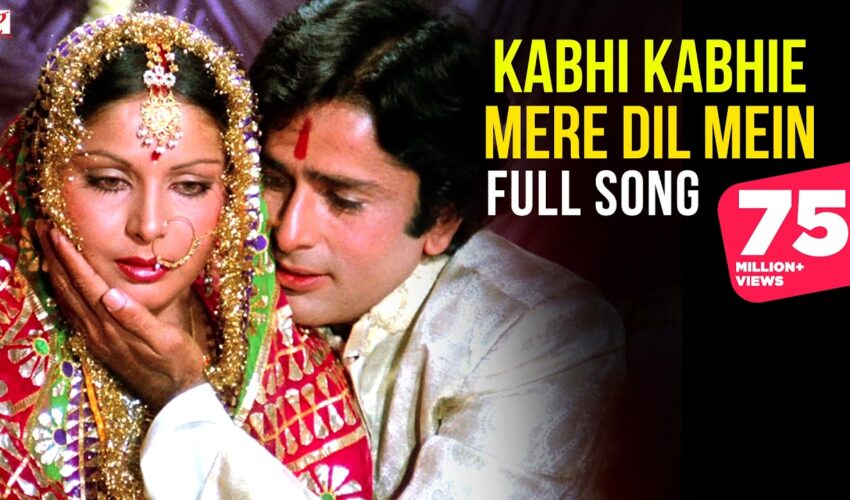

Kabhi Kabhie Mere Dil Mein from Kabhi Kabhie, sung by Lata Mangeshkar, is one of the most celebrated romantic songs of Hindi cinema. Watch the full video song above.
What this video is about
This video presents the official full song of Kabhi Kabhie Mere Dil Mein from Yash Chopra’s 1976 classic Kabhi Kabhie, featuring Rakhee, Amitabh Bachchan and Shashi Kapoor.
Lata Mangeshkar’s heartfelt rendition, set to Khayyam’s gentle melody, expresses the pain of lost love with quiet grace. The song remains a signature of golden-era Bollywood romance.
Why listeners like this song
- Lata Mangeshkar’s deeply moving vocal performance.
- Khayyam’s soft, unforgettable melody.
- A staple of retro Bollywood and evergreen romantic playlists.
- The elegant picturisation on Rakhee and Amitabh Bachchan.
About the song
- Song: Kabhi Kabhie Mere Dil Mein
- Movie: Kabhi Kabhie (1976)
- Singer: Lata Mangeshkar
- Music: Khayyam
- Label: YRF
- Type: Bollywood Movie Song
Theme and meaning
The theme is love remembered after it is lost. The song speaks of the lingering ache when love slips away, and of the way certain memories stay with us. Its tenderness comes from accepting that loss without bitterness.
Who should watch this video
This video suits fans of classic Bollywood romance, admirers of Lata Mangeshkar and Khayyam, and anyone who loves the films of Yash Chopra.
Frequently Asked Questions
Who sings Kabhi Kabhie Mere Dil Mein?
This version is sung by Lata Mangeshkar, as credited in the video title.
Which movie is the song from?
The song is from Kabhi Kabhie (1976), directed by Yash Chopra and starring Amitabh Bachchan, Shashi Kapoor and Rakhee.
Who composed the music?
The music was composed by Khayyam, as shown in the video credits.
Where can I watch the full video?
You can watch the full video in the player embedded at the top of this page.
Disclaimer
This page is for informational purposes. The video is embedded from YouTube and belongs to its original creator and label. Videomora does not claim ownership of the video, song or recording.